Cozy Is the New Cool: Inside America's Loudest Fashion Rebellion

Photo: EdwinAlden.1995, CC BY-SA 4.0, via Wikimedia Commons
For a hot minute, it seemed like the whole country had agreed to dress like a Scandinavian architect on a weekend retreat. Oatmeal tones. Clean lines. Cashmere that whispered rather than spoke. Quiet luxury — that aspirational aesthetic built on the premise that real taste is invisible — had its moment, and it was a very beige, very expensive moment.
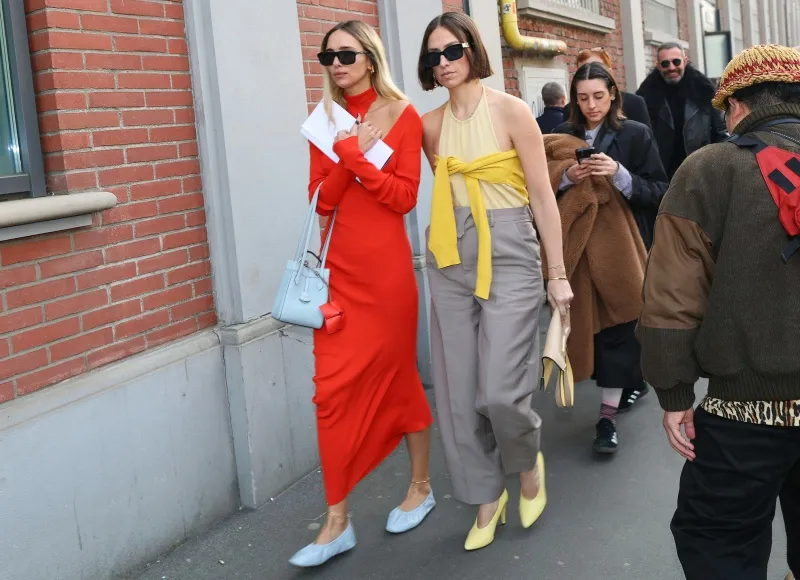
But something shifted. Slowly at first, then all at once, the cultural mood broke in the opposite direction. Bold prints came back. Maximalist home décor started filling up everyone's Pinterest boards. People started wearing things that made them happy rather than things that signaled restraint. The aesthetic pendulum didn't just swing — it slammed.
Welcome to what designers, stylists, and a whole lot of regular people on social media are calling "loud comfort" — and it might be the most honest fashion statement Americans have made in years.
What Quiet Luxury Got Wrong
To be fair, quiet luxury made a kind of sense when it emerged. Coming out of the pandemic, when sweatpants had become a personality trait and getting dressed felt performative in a hollow way, the appeal of something refined and effortless was real. Dressing down felt chaotic; dressing with quiet intention felt like reclaiming something.
But here's the thing about aspirational minimalism: it's exhausting to maintain, and it has a built-in class problem. The "no logo" ethos of quiet luxury was always a bit of a wink — everyone who understood the game knew that a $4,000 Loro Piana sweater in cream was screaming status louder than any graphic tee ever could. It was exclusive by design, accessible only to those who could afford to buy into the aesthetic convincingly.
For the majority of Americans who can't drop four figures on a knit, the message landed somewhere between alienating and just plain boring.
"There was this pressure to look like you weren't trying," says Chicago-based stylist and content creator Dani Reyes, who has built a following around what she calls "intentional maximalism." "But not trying is also a choice that takes a lot of effort and money. People got tired of performing effortlessness. They wanted to actually enjoy getting dressed again."
The Anatomy of Loud Comfort
So what does loud comfort actually look like? It's less a single aesthetic than a philosophy, which is part of what makes it feel so refreshing compared to the rigidity of its predecessor.
At its core, it's about prioritizing feeling over signaling. That might mean an oversized vintage band tee tucked into wide-leg trousers in a print that shouldn't work but absolutely does. It might mean a living room that mixes a bold velvet sofa with mismatched throw pillows and a gallery wall that's part family photos, part thrifted art. It's the fashion equivalent of a home-cooked meal over a tasting menu — more satisfying precisely because it's personal.
Color is a big part of it. After years of greige dominating both fashion and interior design, saturated hues are making a full comeback. Designers like Jonathan Cohen and Prabal Gurung have been leaning into this for seasons now, and the mass market has followed. Walk into any Target or Anthropologie right now and you'll see the evidence — jewel tones, unexpected color combinations, patterns that have opinions.
Texture is equally important. Boucle, velvet, chunky knits, sherpa — materials that invite touch and suggest warmth rather than sleekness. If quiet luxury wanted to look untouchable, loud comfort wants to be hugged.
A Generational Fault Line
The shift maps interestingly onto generational attitudes, though not in the ways you might expect. Millennials, who came of age during the peak of Instagram-optimized aesthetic culture, are often the ones most consciously pushing back against it. Having lived through the VSCO filter era, the normcore phase, and the athleisure explosion, many are approaching their thirties and forties with a kind of style exhaustion — and a desire to dress for themselves rather than for a curated grid.
Gen Z, meanwhile, never fully bought into the aspirational minimalism thing in the first place. Their fashion reference points are more eclectic — Y2K revival, gorpcore, cottagecore, and a dozen other micro-aesthetics that celebrate specificity over universality. If anything, the loud comfort trend resonates with Gen Z's broader rejection of the idea that style should be aspirational toward a single ideal.
"My generation doesn't really have one look," says 23-year-old fashion blogger and vintage reseller Imani Torres from Atlanta. "We have a hundred looks, and the point is that they're all valid. Comfort and boldness aren't opposites. You can be cozy and still have a whole moment."
Boomers and older Gen Xers, interestingly, are also part of this story — just from a different direction. Having watched trends cycle enough times to feel genuinely liberated from them, many older Americans are embracing a kind of joyful pragmatism in how they dress. Comfortable shoes that look good. Vibrant colors because why not. Clothes that fit the body they have rather than performing the body they're "supposed" to have.
What This Actually Says About Us
Fashion has always been a cultural barometer, and the turn toward loud comfort is telling us something specific about where American culture is right now. After years of aspirational branding — the hustle aesthetic, the wellness industrial complex, the curated-life fantasy — there's a genuine hunger for authenticity that doesn't require a price tag to validate it.
The rise of thrifting and vintage resale, now a multi-billion-dollar industry, is part of this story. So is the growing visibility of body-positive and size-inclusive voices in fashion spaces that once felt impenetrable. When style becomes about self-expression rather than status achievement, the barriers to entry drop dramatically — and that's a good thing.
Interior design is tracking the same shift. The all-white kitchen with open shelving and exactly three decorative objects is giving way to spaces that look genuinely inhabited — maximalist bookshelves, bold wallpaper, furniture that prioritizes sink-into-it comfort over photogenic austerity. The "lived-in" look is no longer an apology. It's the point.
Maybe the loudest thing about loud comfort is what it's actually saying: that how you feel in your space and your clothes matters more than how they're perceived. That's not a small statement. In a culture that spent the better part of a decade optimizing everything for external validation, choosing your own comfort over someone else's aesthetic approval might just be the most radical thing you can wear.