Feeding Your Brain on Purpose: The Gen Z Guide to Choosing What You Actually Watch
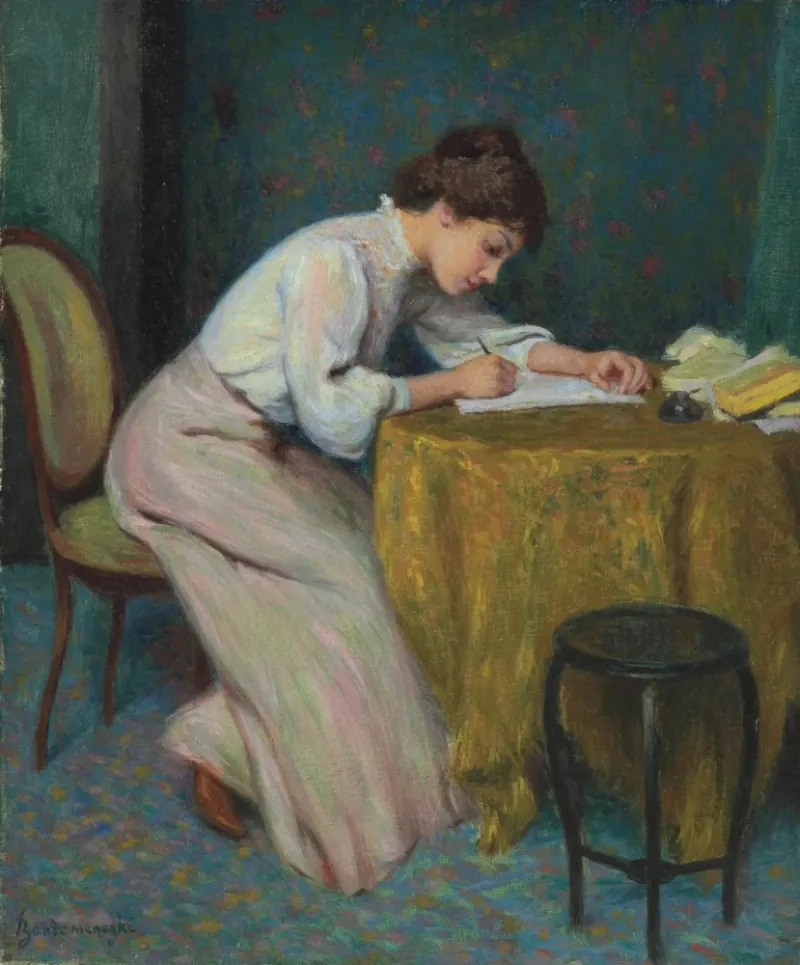
Photo: Federico Zandomeneghi, Public domain, via Wikimedia Commons
Somewhere between the fourteenth autoplay video and the third "you might also like" suggestion, something snapped for 22-year-old Destiny Okafor. She was sitting in her Chicago apartment on a Tuesday night, technically watching TV but not really watching anything at all. "I'd been on the couch for two hours and I couldn't even tell you what I'd seen," she says. "I just felt... hollow."
So she did something radical. She turned it off. Then she made a list.
That list — broken down by mood, energy level, and what kind of mental reset she was actually craving — is what she now calls her dopamine menu. Think of it like a restaurant menu for your brain: instead of letting an algorithm decide what you consume, you pre-select entertainment options that serve a specific emotional purpose. Movie nights become intentional. Playlists get curated. Even podcast listening gets scheduled.
And Destiny is far from alone.
The Algorithm Hangover Is Real
For most of the past decade, streaming platforms and social media apps have operated on a simple promise: we know what you want better than you do. Recommendation engines powered by behavioral data have quietly taken over the remote control, nudging users toward content that keeps them engaged longest — not necessarily content that makes them feel good.
Dr. Priya Mehta, a behavioral psychologist based in Austin, Texas, says the consequences of that model are starting to show. "What we're seeing clinically is a kind of decision fatigue layered on top of passive consumption," she explains. "People are spending enormous amounts of time consuming content, but they're not getting the emotional payoff they're actually seeking. The algorithm optimizes for engagement, not fulfillment."
That gap between engagement and fulfillment is exactly what the dopamine menu concept tries to bridge. Rather than outsourcing the curation job to a machine, users take back the wheel — categorizing content by the feeling it produces rather than just the genre it falls into.
A typical menu might include a "hype" column for high-energy music or fast-paced shows when motivation is needed, a "soft landing" section for gentle comfort content after a rough day, and a "brain stretch" category for documentaries or deep-dive podcasts when the mind wants a real workout.
DIY Curation as a Form of Self-Knowledge
Content creator Marcus Webb, who runs a lifestyle channel out of Atlanta with just under 200,000 subscribers, started talking about his own dopamine menu on TikTok earlier this year. The response, he says, was overwhelming. "People were DMing me saying they'd been doing something similar without having a name for it," he recalls. "Like, everyone kind of knew the algorithm wasn't serving them, but nobody had framed it as something you could actually fix yourself."
Marcus now structures his entire content consumption week in advance. Sunday evenings are for what he calls "slow media" — long-form essays, documentary films, albums listened to front-to-back. Weekday mornings get a tight ten-minute news audio briefing. Friday nights are reserved for whatever genuinely sounds fun, no guilt attached.
"It sounds rigid but it actually feels like freedom," he says. "Because I'm never just... floating."
Dr. Mehta sees this as part of a broader psychological shift. "When you make an intentional choice about what to consume, you activate a different part of your brain than when you passively receive suggestions," she says. "There's a sense of agency that actually boosts the enjoyment of the content itself. You feel like you earned the experience."
Mood Boards for Your Evenings
The aesthetic dimension of dopamine menus shouldn't be underestimated either. For a generation raised on visual organization tools — Pinterest boards, Notion dashboards, color-coded Google calendars — translating that instinct to entertainment consumption feels completely natural.
College senior Jaylen Torres from Phoenix keeps his dopamine menu as a Notion page, complete with embedded trailers, Spotify playlist links, and little emoji tags that indicate the emotional register of each item. "It's kind of like meal prepping but for my free time," he says with a laugh. "I put in a little effort upfront so I'm never standing in front of the fridge at 11 PM wondering what to eat."
The food metaphor is deliberate and telling. Just as the wellness movement pushed Americans to think more carefully about what they put in their bodies, a quieter cultural current is now encouraging people to think about what they put in their heads.
What This Says About Us Right Now
It would be easy to dismiss the dopamine menu as another Gen Z productivity trend dressed up in neuroscience vocabulary. But Dr. Mehta thinks it points to something more significant. "This generation grew up entirely inside algorithmic systems," she says. "They understand intuitively that those systems have an agenda. Pushing back against that — reclaiming their own taste — is actually a pretty sophisticated form of media literacy."
Marcus puts it more simply. "The algorithm knows what I clicked on," he says. "It doesn't know what I actually needed."
For Destiny, the dopamine menu has become less of a productivity hack and more of a form of ongoing self-knowledge. "I know myself better now," she says. "Like, I know that when I'm anxious I don't actually want action movies even though that's what I used to default to. I need something slow and kind. The menu helped me figure that out."
In a media landscape that profits from our passivity, choosing your own content — deliberately, lovingly, on your own terms — might be the most quietly rebellious thing you can do. And honestly? It sounds kind of great.