Morning, Reclaimed: The Quiet Revolution Happening at America's Breakfast Tables
Somewhere between the fourth alarm snooze and a lukewarm coffee gulped over a sink, a lot of Americans quietly decided: enough. Not in a dramatic, quit-your-job kind of way. More like a slow, stubborn pivot toward something that actually feels human. And weirdly, it's showing up most clearly at the breakfast table.
Breakfast — that meal we spent decades treating like an obstacle between us and our commute — is back. Not just back, actually. It's been completely reimagined. For a growing number of people, the morning meal has become the most intentional part of the entire day.
From Fuel Stop to Full Ritual
For years, the cultural message around breakfast was efficiency. Grab a bar. Chug a shake. Intermittent fast your way through the whole thing and feel virtuous about skipping it entirely. Mornings were a logistics problem to be solved, not an experience to be savored.
But something shifted. Maybe it was the pandemic forcing people to actually sit in their own kitchens. Maybe it's the broader cultural fatigue with hustle-worship. Maybe it's just that TikTok made elaborate breakfast spreads deeply aspirational. Probably all three.
Jamila, a 34-year-old graphic designer in Atlanta, describes the change in her own life as almost accidental. "I started making real oatmeal during lockdown — like, actual steel-cut oats with toppings — because I had nowhere to be," she says. "And then I just... never stopped. Now it's the one part of my morning I genuinely protect. My whole day feels different when I skip it."
That word — protect — comes up a lot when people talk about their morning routines now. Not "fit in" or "try to do." Protect. Like it's something worth defending.
The Coffee Ceremony Isn't Just Aesthetic
Walk through any mid-sized American city on a weekend morning and you'll notice something: people are taking their time. Specialty coffee shops with pour-over bars have lines out the door not because the coffee is faster, but because it's slower. Watching a barista carefully bloom grounds and time a four-minute brew has become, for many people, a kind of meditation they didn't know they needed.
At home, the ritual has gone even deeper. Entire communities on Reddit and YouTube are dedicated to the art of the morning cup — grind size, water temperature, kettle technique. It sounds obsessive from the outside, but ask anyone who's fallen down that rabbit hole and they'll tell you the same thing: it's not really about the coffee. It's about having something in your morning that demands your full, unhurried attention.
Marcus, a 29-year-old teacher in Portland, Oregon, started doing a Japanese-style pour-over every morning about two years ago. "It takes maybe ten minutes, but those ten minutes are mine," he says. "I'm not checking my phone. I'm not thinking about my first period class. I'm just making coffee. It sounds so small, but it completely changed how I feel when I walk out the door."
Sunday Pancakes as Political Act
If the weekday morning ritual is about calm and control, the weekend version has taken on a whole different energy — one that's louder, more social, and almost defiantly indulgent.
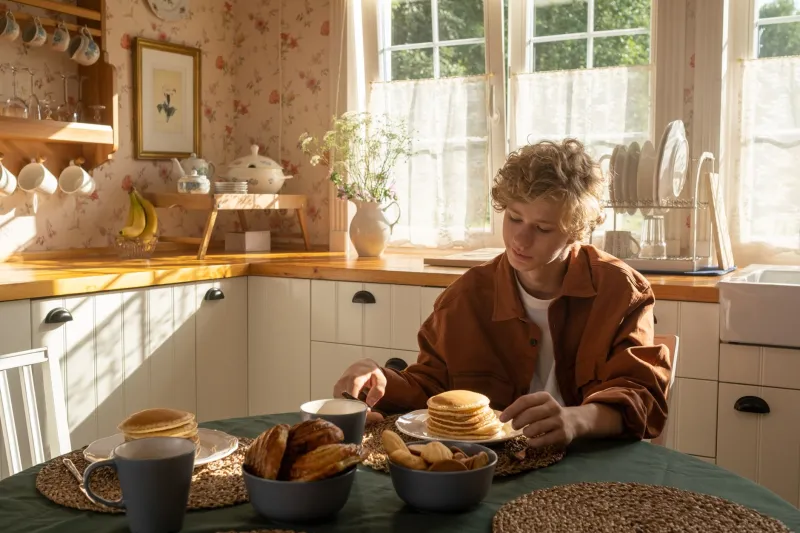
Elaborate Sunday breakfast culture is thriving. We're talking homemade sourdough waffles, Dutch babies dusted with powdered sugar, shakshuka simmering on a cast iron skillet while someone's Spotify playlist fills a sunny kitchen. These aren't just meals. They're events. Experiences worth photographing, yes, but more importantly, worth having.
For many people, the Sunday breakfast has become a weekly anchor — something that structures the weekend and gives the household something to gather around. In an era when family dinner has gotten harder to pull off between schedules and screens, the morning meal is stepping up.
"We do a big breakfast every Sunday, no exceptions," says Priya, a 41-year-old mom of two in Chicago. "It started as a thing to do with the kids during the pandemic, but now they actually ask about it on Saturday night. Like, 'What are we making tomorrow?' That question makes me so happy I could cry."
Pushing Back Against the Always-On Grind
There's a reason this shift is happening now, and it's not just nostalgia. Americans are exhausted. The hustle culture that peaked somewhere around 2017 — the 5 a.m. workouts, the productivity hacks, the glorification of busy — has started to crack under its own weight. People aren't abandoning ambition, but they are renegotiating their relationship with it.
Breakfast, in this context, is a form of resistance. Choosing to sit down and eat a real meal before the world gets its hands on you is a statement. It says: I exist outside of my output. I am a person who deserves a slow morning. The work will wait fifteen minutes.
This connects to a broader cultural conversation around self-care that has, thankfully, matured past face masks and bath bombs. Real self-care, people are realizing, looks a lot more like consistent, boring, nourishing habits. It looks like eating breakfast on purpose.
What Goes on the Plate Is Personal
One of the most interesting things about this breakfast renaissance is how individualized it is. There's no single aesthetic or dietary approach driving it. The avocado toast crowd coexists peacefully with the bacon-and-eggs traditionalists. The intermittent fasters who do eventually eat breakfast at 11 a.m. are just as intentional about it as the people who sit down at 7 sharp.
What unites them isn't what they're eating — it's the how and the why. The decision to treat the first meal of the day as something worth showing up for, rather than something to get through.
Food has always been about more than nutrition, of course. But there's something specifically powerful about reclaiming the morning meal. It's the first choice you make in the day. The tone it sets — rushed or grounded, reactive or intentional — ripples outward into everything that follows.
The Morning Belongs to You First
Maybe that's the real story here. Not that Americans suddenly love eggs more than they used to. But that a lot of people are quietly, deliberately taking back the first hour of the day before it gets colonized by notifications, demands, and other people's urgency.
Breakfast is just the ritual that makes that reclamation feel real. Something to hold in your hands. Something warm. Something that says, without any fanfare: this morning is mine.
And honestly? That might be the most radical thing happening in America right now.