Table for One, Please: How Eating and Traveling Solo Became America's Coolest New Flex

Photo: woman dining alone at elegant restaurant with wine glass and book, via thumbs.dreamstime.com
Not long ago, asking for a table for one at a nice restaurant felt like an admission of something. You'd slide in, maybe pull out your phone immediately to signal that you were busy, not lonely, and hope nobody noticed. Solo travel carried a similar weight — fine for backpackers in their twenties, maybe, but anything more intentional required explaining yourself.
That era is over.
In 2025, dining alone at a great restaurant and booking a solo trip to Japan or New Orleans isn't something Americans are hiding. They're posting it. Celebrating it. Recommending it to their friends. The solo experience has completed a full cultural reversal — from social liability to identity statement — and the speed of that transformation says a lot about where we are as a culture.
When Did Alone Stop Meaning Lonely?
The shift didn't happen overnight, and it wasn't driven by one trend. It was a convergence.
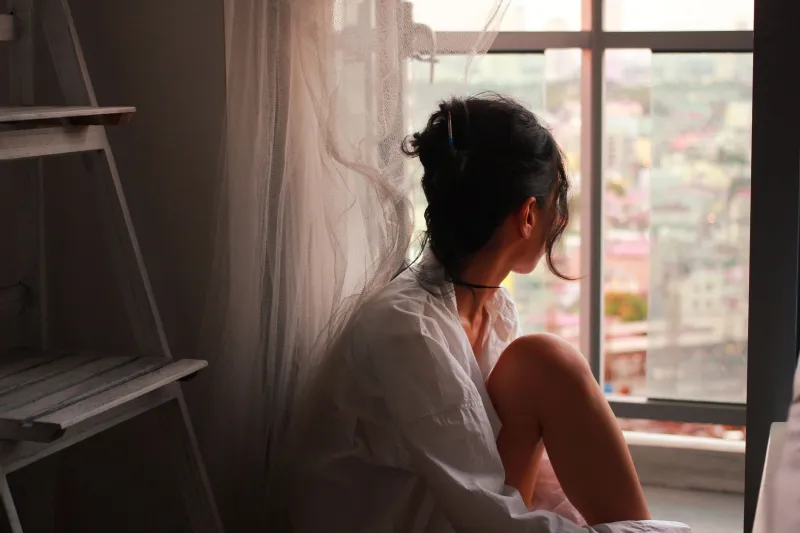
The pandemic played a role that nobody fully predicted. When collective experiences were stripped away, millions of Americans were forced into a kind of involuntary solitude — and some of them discovered, uncomfortably at first and then with genuine surprise, that they were okay on their own. More than okay. They found out what they actually liked to eat when nobody else was choosing. Where they actually wanted to go. What pace they actually preferred.
That self-knowledge didn't evaporate when restaurants reopened. It got folded into identity.
At the same time, a broader cultural conversation about independence, emotional self-sufficiency, and what a fulfilling life actually looks like was already underway. Therapy culture, the decline of traditional relationship timelines, the rise of the "main character" framing — all of it created space for a new kind of social confidence. One that doesn't require an audience to be valid.
The Solo Diner Is Having a Moment
Restaurant industry data tells an interesting story. OpenTable reported a significant rise in single-diner reservations over the past few years, with solo bookings at upscale and fine dining establishments growing at a rate that caught the industry off guard. Restaurants are responding: bar seating designed for solo diners, chef's counter experiences that explicitly cater to one, and menus structured around individual tasting portions.
Some of the most celebrated dining experiences in major US cities — Alinea in Chicago, Le Bernardin in New York, n/naka in LA — now regularly seat solo guests at prime spots, a shift from an era when a single reservation might get you tucked near the kitchen.
What's changed isn't just logistics. The meaning attached to solo dining has shifted. Eating alone at a good restaurant used to read as sad; now it reads as someone who knows exactly what they want and doesn't need company to justify the experience. That's a different kind of social signal entirely.
On Instagram and TikTok, the solo dining aesthetic has its own visual language: a beautifully plated dish, a glass of wine, a book or journal nearby, no second place setting. The caption often doesn't need to say anything explicit. The image does the work.
Solo Travel as Self-Portrait
The solo travel conversation is even louder. Travel platforms like Airbnb, Tripadvisor, and Booking.com have all noted consistent growth in solo bookings, and travel content creators who document their solo trips — particularly women traveling alone — have built some of the most engaged audiences in the lifestyle space.
What's striking is the framing. Solo travel content isn't presented as brave in the old, slightly patronizing sense — look at her, all by herself! It's presented as intentional. Curated. An act of self-knowledge rather than self-sacrifice.
The itinerary of a solo traveler is, by definition, a self-portrait. You go where you want to go, eat what you want to eat, spend as long as you want in the museum and skip the thing you only would have done for someone else. There's a clarity to that which resonates with a generation that has spent a lot of time interrogating what they actually want versus what they've been told to want.
And socially, the solo traveler often ends up more connected, not less. Without a travel companion to default to, you talk to strangers. You take the detour. You end up at the local bar at 9pm on a Tuesday because you were curious, not because it was on the itinerary.
Social Media and the Performance of Solitude
Here's where it gets a little complicated. If solitude is being performed on social media — photographed, captioned, and posted — is it really solitude? It's a fair question, and one that people who participate in this culture wrestle with openly.
The honest answer is: it's both. The documentation doesn't necessarily cancel out the experience. A person can eat a genuinely meaningful solo dinner and post a photo of it. The performance and the authenticity can coexist.
What social media has done is make the solo experience visible in a way it never was before. And visibility, as any cultural shift knows, is the precondition for normalization. When millions of people see solo dining and solo travel represented as desirable, confident, and worth aspiring to, the stigma that required company as social proof starts to dissolve.
The shame needed an audience to survive. And now the confidence has one instead.
What It Actually Says About Us
At its core, the solo flex is about a redefinition of success that's been quietly building for a while. The old markers — partnership, group belonging, never being without plans — are still valued, but they're no longer the only proof that your life is working.
Knowing yourself well enough to spend time alone, to choose your own experience without needing it validated by someone else's presence, has become its own form of social capital. It signals emotional maturity, financial independence, and a kind of inner life that can't be faked.
Table for one? That's not a consolation prize anymore. In 2025, it might just be the most confident order in the room.