Staring at the Wall and Loving It: The Quiet Rebellion of Doing Absolutely Nothing
Let's be honest about something: we are absolutely terrible at doing nothing.
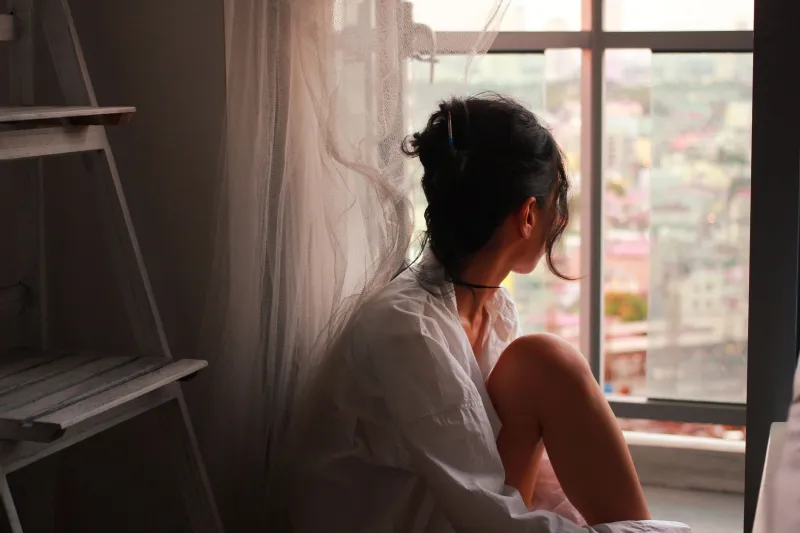
Not sleeping. Not meditating. Not "resting" while a podcast plays in the background or a show runs on the second monitor. Actually, genuinely, uncomfortably nothing — staring out a window, sitting on a porch without your phone, letting your mind drift wherever it wants without any input from the outside world.
For most Americans, that description probably sounds either deeply boring or vaguely anxiety-inducing. Which is exactly the point.
The Stimulation Trap We All Walked Into
Somewhere along the way, we collectively agreed that empty time was a problem to be solved. Waiting rooms got TVs. Car rides got playlists. Bathroom trips got smartphones. Every gap in the day became an opportunity to consume something — content, news, music, notifications — until the idea of a truly quiet, input-free moment started to feel almost foreign.
And the hustle culture machine was happy to help frame it that way. "Idle hands" became a moral failing. Busyness became a status symbol. If you weren't doing something — learning, creating, networking, optimizing — you were falling behind. Rest was only acceptable if it was productive rest: sleep tracking, recovery metrics, strategic napping.
But here's the thing. A quiet counter-movement has been building, and it's not interested in being productive about anything.
The People Choosing Boredom on Purpose
Jamie T. is 34 and works in software development in Portland, Oregon. About eighteen months ago, he started what he calls his "nothing practice" — thirty minutes every Sunday morning where he sits in a chair by the window with no phone, no music, no book. Just the window. Just his thoughts.
"The first few times were genuinely uncomfortable," he admits. "My brain kept throwing stuff at me — things I needed to do, things I was worried about, random memories. It felt chaotic. But after a few weeks, something shifted. I started looking forward to it. It became the quietest, most mine part of my week."
Jamie isn't alone. Online communities dedicated to "slow living," "monotasking," and even just "sitting quietly" have grown steadily over the past few years, drawing people who are exhausted by the pace of modern connectivity and looking for something that doesn't ask anything of them.
And crucially, they're not calling it meditation. They're calling it boredom. Deliberately, unapologetically.
What's Actually Happening in Your Brain When You're Bored
It turns out, boredom isn't the cognitive dead zone we've been treating it as. Neuroscientists have spent the last decade getting genuinely excited about what the brain does when it's not being stimulated from the outside.
When you're bored — really bored, not distracted-bored — your brain activates what's called the default mode network (DMN). This is the system that powers daydreaming, self-reflection, creative thinking, and the kind of mental free-association that leads to unexpected ideas. It's the network that's basically off when you're consuming content, responding to pings, or following external input.
"The default mode network is sometimes called the imagination network for a reason," explains neuroscience writer and researcher Lydia Chen, who covers cognitive science for several publications. "When we're constantly stimulated, we're essentially keeping that system suppressed. Boredom — genuine, unstructured mental downtime — is what lets it come back online."
This is why so many people report their best ideas hitting them in the shower, on a long drive, or right before sleep. Those are the rare moments when external input drops off and the brain finally gets to do its own thing.
We've been accidentally optimizing that out of our lives.
Boredom as a Cultural Identity Statement
Here's where things get interesting from a style-and-identity angle: choosing boredom in 2024 is a look. Not in the fashion sense — though the aesthetic of slow living (linen, analog, unhurried) is definitely having a moment — but in the sense that it signals something about who you are and what you value.
In a landscape where everyone is performing productivity, creativity, or at minimum curated leisure, opting out of all of it reads as quietly radical. The person at the coffee shop with no laptop, no AirPods, just a drink and a window? They're making a statement, even if they're not trying to.
It's the same energy as buying a flip phone or canceling all your streaming subscriptions at once. It's a refusal. And refusals, in a culture built on consumption and engagement, carry weight.
Kezia R., a 27-year-old graphic designer in Atlanta, says she started being intentionally bored after burning out hard in 2022. "I was consuming content constantly and still felt creatively empty. I'd watch three hours of design tutorials and then sit down to work and have nothing. It took me a while to realize I wasn't giving my brain any space to actually generate anything. I was just shoveling stuff in."
She now takes what she calls "blank afternoons" — no agenda, no plans, no screen time. "Sometimes I end up napping. Sometimes I doodle. Sometimes I just sit outside and watch what's happening on my street. And then I'll go back to work and have more ideas than I know what to do with."
The Hustle Culture Hangover
It would be easy to frame all of this as a Gen Z or millennial thing, but the hunger for stillness seems to cut across generations. What's shifted is the language around it. Older generations didn't have to justify doing nothing — it was just called Sunday afternoon, or the porch, or watching the game without also checking your phone every three minutes.
What's new is the need to reclaim it consciously, to argue for its value against a cultural backdrop that treats every unmonitored moment as a missed opportunity.
And maybe that's the most countercultural thing about the boredom movement: it doesn't ask you to optimize your nothing. It doesn't want you to journal about it, track it in an app, or turn it into content. It just wants you to sit there and let time pass in the most human, unproductive, beautifully pointless way possible.
How to Be Bored (For Real This Time)
If you're intrigued but don't know where to start, the bar is genuinely low. You don't need a retreat or a program or a book about it (though books about it exist, which is its own kind of irony).
Start with five minutes. No phone. No music. Sit somewhere you like — a window, a porch, a park bench — and just let your brain do whatever it wants. It'll probably be uncomfortable. That's fine. That's the whole thing.
The discomfort is the signal that it's working. Your brain is trying to reach for its usual inputs, and you're gently declining. Give it a minute. It'll figure out what to do with itself. It always does.
And when a weird idea floats up — something you haven't thought about in years, a random creative impulse, a memory you'd forgotten — don't reach for your phone to capture it. Just let it be there for a while.
You can always come back to it. The wall will wait.