Slow Down, It's Sacred: The Small Daily Rituals Americans Are Quietly Reclaiming

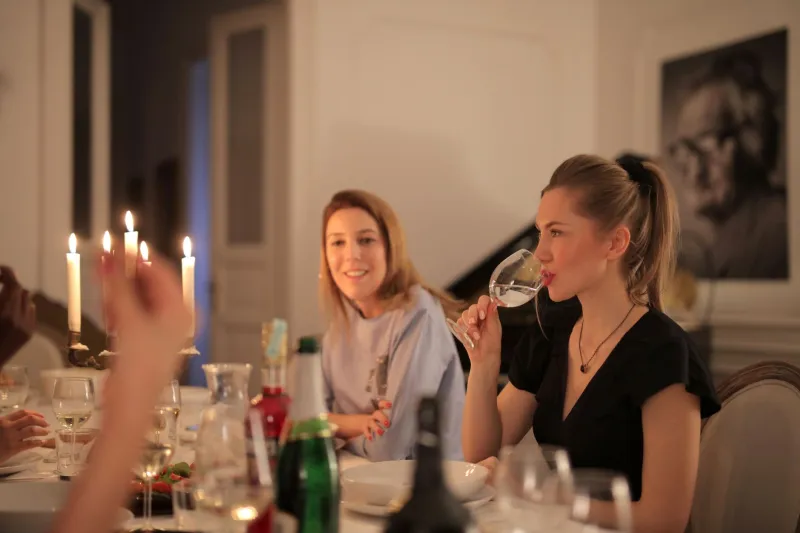
Photo by Photo by Louis Hansel on Unsplash on Unsplash
Somewhere between the fourth notification of the morning and the second cup of coffee you don't remember making, something got lost. Not your keys. Not your phone. Something harder to name — a sense that the small moments of your day actually belong to you.
That's the feeling a lot of Americans are chasing right now. And interestingly, the way they're chasing it looks a lot like the past.
The Return of the Ceremony
Call it a ritual revival. Across the country, people are deliberately bringing back everyday ceremonies that their grandparents would recognize — and that their smartphones would have absolutely no use for. We're talking about Sunday letter-writing sessions with actual stationery. Elaborate pour-over coffee routines that take twenty minutes and refuse to be rushed. Evening tea rituals borrowed from Japanese or British tradition, adapted for a Wednesday night in Cincinnati or Portland.
None of these things are efficient. None of them are optimized. That might be exactly the point.
"There's a difference between a habit and a ritual," says cultural anthropologist and author Dimitri Okafor, who studies how modern Americans relate to ceremony. "A habit is something you do on autopilot. A ritual is something you do with intention, with some sense that the act itself carries meaning — even if you can't fully articulate what that meaning is."
Right now, people are very much in the market for meaning.
Why Now?
It's not hard to see why this is happening. The last few years handed Americans a sustained lesson in how quickly the familiar can disappear. Routines collapsed. Anchors drifted. And when things started opening back up, a lot of people found they didn't want to simply return to the breakneck pace they'd left behind.
Add to that the relentless pressure of being constantly connected — the expectation that you're reachable, responsive, and productive at virtually all hours — and you've got a recipe for a certain kind of exhaustion that a wellness app just isn't going to fix.
So people are reaching for something older. Something slower. Something that existed long before the concept of "hustle culture" was ever a hashtag.
Coffee as Ceremony
Let's start with the most American of all morning rituals: coffee. For decades, coffee was fuel — something you grabbed, gulped, and moved on from. The faster, the better. Drive-throughs were a triumph of efficiency. The pod machine was a technological achievement.
But lately, a different kind of coffee culture has taken hold. Not the one that's about premium beans and Instagram aesthetics (though that exists too). This one is quieter. It's the person who wakes up thirty minutes earlier than necessary so they can grind their beans by hand, heat water to a precise temperature, and pour it slowly over a ceramic dripper — alone, in silence, before anyone else in the house is awake.
Ask them why they do it and they'll struggle to explain it in terms that sound rational. "It just makes me feel like I'm actually present," one Chicago-based teacher told a friend, apparently. "Like the day hasn't started without me."
That's a ritual talking.
The Letter-Writing Renaissance
Then there's the handwritten letter. Email killed it. Texting finished it off. And yet — here it is, crawling back.
Small but notable communities on Reddit and TikTok have built followings around the practice of writing actual letters, on actual paper, with pens they've spent time choosing. There are fountain pen enthusiasts who will spend a Sunday afternoon composing a single two-page letter to a friend they could easily text in thirty seconds. The point isn't communication efficiency. The point is the act itself — the slowing down, the choosing of words with more care, the physical sensation of writing by hand.
Stationary brands have noticed. Independent paper shops in cities like Austin, Brooklyn, and Nashville report that letter-writing supplies — wax seals, quality envelopes, heavyweight notecards — have seen a genuine resurgence in demand. People aren't just buying them as gifts. They're buying them for themselves.
Sunday as a Ritual Container
Maybe the biggest shift is happening on Sundays. For a long time, Sunday became just another day of anxious preparation for Monday — a kind of pre-work stress rehearsal dressed up in athleisure. Meal prep, inbox checking, list-making. Productive, sure. Restorative? Not exactly.
Now there's a counter-movement. People are treating Sunday less like a runway and more like a container — a day with its own distinct texture and ceremonies. Farmers market trips that aren't rushed. Long breakfasts with no phones at the table. Afternoon baking sessions that aren't about the end product so much as the process. Evening walks taken at a pace that would frustrate anyone wearing a fitness tracker.
These aren't productivity hacks. They're not optimizing anything. They're just... rituals. Small acts of declaring that some time belongs to you, on your terms, at your pace.
The Rebellion Is Quiet, But It's Real
What's interesting about this ritual revival is how deliberately low-key it is. This isn't a movement with a manifesto. There's no app for it (which is, again, probably the point). It doesn't have a celebrity spokesperson or a viral challenge attached to it.
It's just a lot of individual people, independently arriving at the same conclusion: that the texture of daily life matters, and that texture is built from small repeated acts carried out with some degree of care and intention.
In a cultural moment that rewards speed, volume, and constant output, choosing to spend twenty minutes making a cup of coffee that you could have made in two minutes is a kind of quiet defiance. Writing a letter instead of sending a voice memo is a small act of resistance. Sitting down for Sunday breakfast and treating it like it deserves to be treated — unhurried, present, deliberate — is, in its own modest way, radical.
Finding Your Own Ceremony
The good news is that this doesn't require a total lifestyle overhaul. The whole appeal of micro-rituals is that they're small. They fit inside ordinary life rather than replacing it.
Maybe it's the way you make your morning drink. Maybe it's a weekly phone call with your mom that you treat like an appointment rather than a catch-up. Maybe it's lighting a candle before you sit down to read in the evenings, not because candles are necessary for reading, but because the act of lighting it signals something to your brain — this time is different, this time is mine.
The specifics matter less than the intention. What these revived rituals share isn't their form — it's the fact that someone chose them deliberately, and keeps choosing them, day after day. Not because they're productive. Not because they're optimized. But because they make ordinary time feel a little more like it belongs to the person living it.
And honestly? In 2025, that might be the most countercultural thing you can do.