Talking It Out: Why Real Conversation Is Having Its Big Moment
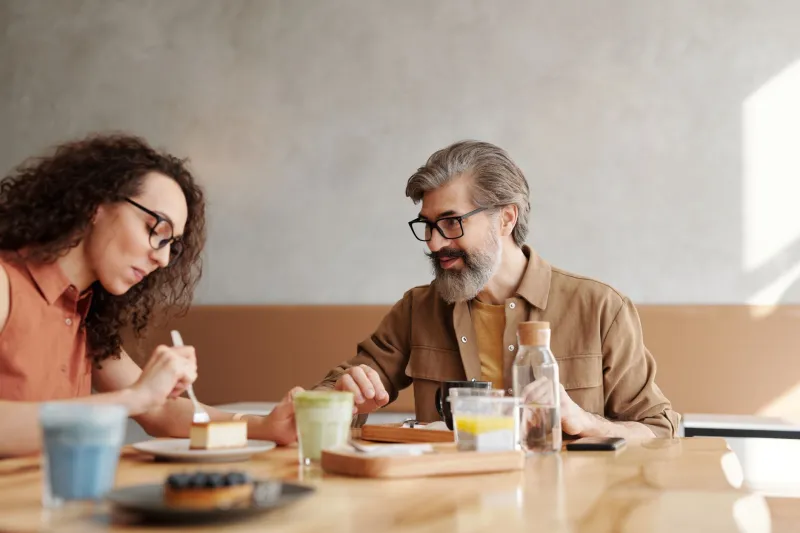
Remember the last time you sat across from someone — no phones face-up on the table, no half-distracted scrolling — and just talked? Like, really talked? If you have to think hard about it, you're not alone. But something interesting is shifting in America right now, and it smells a lot like a conversation revolution.
After years of outsourcing our social lives to group chats, voice notes, and comment sections, a growing number of people are deliberately choosing to put the async communication aside and actually speak to each other in real time. Not on a podcast. Not through a ring light. Just two (or more) humans, words, and the messy, beautiful unpredictability that comes with it.
The Slow Death of the Text Thread
It's not that texting is going anywhere. But there's a growing fatigue around what communication researchers are calling "conversational fragmentation" — the way modern messaging breaks up dialogue into disconnected, time-delayed chunks that strip out tone, nuance, and spontaneity.
"There's a cognitive tax to asynchronous communication that people don't always recognize," says Dr. Priya Mehta, a communication researcher based in Chicago who studies interpersonal dynamics in digital environments. "You're constantly composing, editing, waiting, interpreting. It's exhausting in a way that feels invisible until you actually have a real conversation and realize how much lighter it feels."
That lightness is something a lot of Americans are actively chasing right now. Across cities and suburbs alike, people are organizing phone-free dinners, reviving the lost art of the long phone call (the actual phone call, not FaceTime while doing laundry), and even choosing to walk to a coworker's desk instead of firing off a Slack message.
What We Actually Lost — and Why We Want It Back
Here's the thing about real conversation that no text thread can replicate: it's alive. It breathes. It goes sideways in the best possible ways. You laugh at something you didn't expect, you change your mind mid-sentence, you read someone's face and adjust. That kind of dynamic exchange isn't just socially satisfying — it's neurologically nourishing.
"When we're in a genuine back-and-forth with someone, our brains sync up in ways that just don't happen through a screen," explains Marcus Teller, a behavioral psychologist in Austin who works with corporate teams on communication culture. "There's research on neural coupling — the idea that a speaker and listener's brain activity actually mirrors each other during live conversation. That's connection at a biological level. A voice memo can't do that."
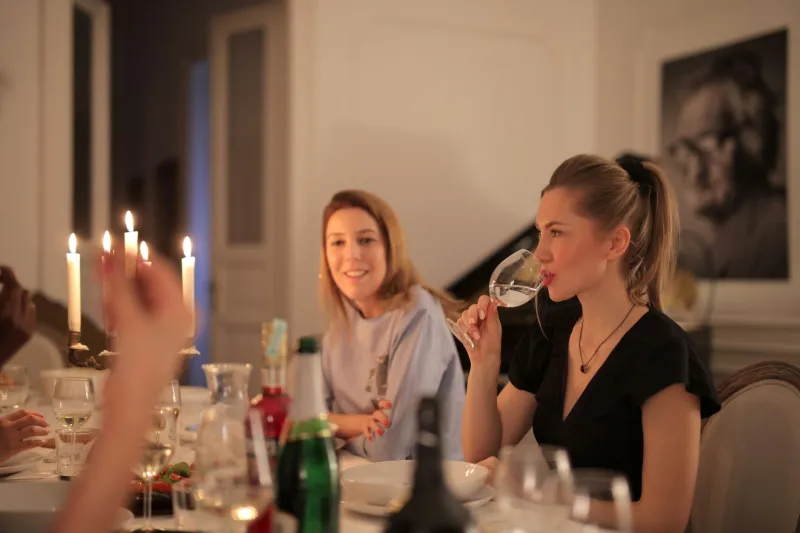
For many people, the pandemic was the unexpected catalyst. Stripped of casual, in-person interaction for months on end, Americans discovered just how much they'd been taking spontaneous conversation for granted — the hallway chat, the coffee shop catch-up, the rambling dinner table tangent that somehow becomes the most memorable part of the night.
It's Showing Up Everywhere
This isn't just a vibe — it's showing up in measurable cultural behavior. Conversation-focused events are popping up in cities from Portland to Atlanta: structured "talk nights" at local bars, philosophy cafés, community dialogue circles modeled loosely on the Socratic tradition but with, you know, better snacks and a cash bar.
Jamila Torres, a 31-year-old event organizer in Brooklyn, started hosting monthly "no-agenda conversations" in her apartment two years ago. What began as six friends sitting around a kitchen table has grown into a rotating group of 25 people who gather specifically to talk — no theme, no agenda, no phones.
"People are hungry for it," she says. "I thought it would feel forced, but it never does. Someone brings up something real, and suddenly everyone's leaning in. You realize how rare it is to just be heard without someone crafting a response on a keyboard."
Workplaces are noticing the shift too. Some companies are actively redesigning their communication norms — building in "conversation hours" where employees are encouraged to talk rather than message, or creating physical spaces specifically intended to invite spontaneous dialogue. It's a quiet pushback against the all-Slack, all-the-time culture that defined remote work.
The New Intimacy
What's striking about this moment is that choosing real conversation has become, in its own way, a countercultural act. In an environment that defaults to async everything, opting to call instead of text, to meet instead of message, carries a kind of intentionality that people notice and appreciate.
"When someone calls me just to talk — not to confirm logistics, not to relay information, but just to talk — it means something completely different than it did ten years ago," says Darnell Hayes, a 44-year-old teacher in Detroit. "It feels like a gift now. Like they chose to give me their actual time."
That reframing — conversation as a gift, as a deliberate choice rather than a default — might be at the heart of why this moment feels so significant. We haven't lost the ability to talk to each other. We've just been choosing not to, often without realizing it. And now, incrementally, people are choosing differently.
So What Does Good Conversation Actually Take?
Spoiler: it's not complicated. Dr. Mehta's research points to a few consistent elements that make real dialogue feel meaningful — genuine curiosity about the other person, a willingness to sit with uncertainty rather than rushing to a conclusion, and the simple act of making eye contact.
"The most powerful thing you can do in a conversation is ask a follow-up question," she says. "Not a pivot, not a pivot-to-yourself — an actual follow-up. It signals that you heard them. That's rare enough now that people remember it."
There's something almost poignant about that. The bar for feeling truly heard has dropped low enough that a simple follow-up question stands out. But maybe that's exactly why this cultural moment matters. We're collectively remembering that talking — messy, unedited, wonderfully unscripted talking — is one of the most human things we do.
And maybe it always deserved a little more of our time.