Nothing on the Calendar? Good. Here's Why That's the Point.

Photo: Daniel Hernández Morillo, Public domain, via Wikimedia Commons
Somewhere along the way, a free Saturday started feeling like a problem to solve. No plans? Better fix that. The cultural pressure to fill every open hour — with brunch reservations, fitness classes, side hustles, social commitments, self-improvement projects — became so normalized that an empty weekend started to feel less like rest and more like failure. A sign that maybe you weren't trying hard enough.
But something's shifting. Quietly, and with a kind of deliberate stubbornness, a growing number of Americans are pushing back. They're canceling plans they never really wanted. They're leaving Sunday mornings genuinely open. And they're calling it — without irony — the dream.
The Optimization Hangover
Let's be real: the hustle era did a number on us. Between the rise of productivity culture, the gig economy glorifying the grind, and social media turning leisure into content, the idea of "wasting" time became almost morally loaded. You weren't just bored — you were behind.
Millennials, who came of age during the 2008 recession and were told relentlessly that their worth was tied to their output, absorbed this particularly hard. Many spent their twenties trying to optimize every spare hour into something résumé-worthy or at least Instagram-worthy. The result? A generation that knows how to be busy but has largely forgotten how to just... be.
Gen Z isn't much different, having grown up with algorithmic feeds designed to make sure there's always something to consume, react to, or participate in. The idea of sitting with actual boredom — no scroll, no queue, no ambient noise — is genuinely foreign to a lot of people under thirty.
But here's the thing about optimization hangovers: eventually, they catch up with you.
What Boredom Actually Does to Your Brain
Psychologists have been saying it for years, but it's finally landing with mainstream audiences: boredom is not a void. It's a state. And it's a surprisingly productive one.
When your brain isn't chasing the next stimulus, it shifts into what researchers call the default mode network — a kind of internal processing mode where you daydream, make unexpected connections, and let thoughts wander without direction. This is where a lot of genuine creativity lives. It's where you suddenly remember something important, solve a problem you weren't consciously working on, or just figure out how you actually feel about something.
In other words, boredom creates mental space. And mental space, it turns out, is incredibly hard to come by when your calendar is a game of Tetris.
There's also a growing body of research linking chronic overscheduling to anxiety and burnout. When your nervous system never gets a genuine break — when even your downtime is structured and goal-oriented — it stays in a low-grade state of alert. Empty time, real empty time, is one of the few ways to actually reset.
The New Luxury Is Unscheduled
Here's where the cultural shift gets interesting. For a long time, busyness was the status symbol. Saying you were slammed, overwhelmed, or overcommitted was a humble brag — proof that you were in demand, important, doing something.
That's starting to flip.
Increasingly, especially among younger Americans, the flex is having nothing to do. Not because you can't fill the time, but because you've consciously chosen not to. An open weekend isn't a social failure; it's evidence that you've got your priorities straight and your boundaries intact. You're not available to every ask. You're not optimizing yourself into the ground. You've protected your time like it actually belongs to you.
This shows up in subtle ways — people declining group chats that want to plan something every weekend, or being upfront with friends about needing a "nothing weekend" without apologizing for it. There's a growing language around this, a shared understanding that blank space in your schedule isn't embarrassing. It's earned.
How to Actually Be Bored (It Takes Practice)
Here's the awkward part: after years of filling every gap, learning to tolerate genuine idleness is harder than it sounds. The first twenty minutes of doing nothing often feel uncomfortable. Restless. Like you should be doing something.
That discomfort is kind of the whole point.
Sitting through the initial itch of boredom — resisting the reflex to pick up your phone, start a podcast, or reorganize your closet — is where the actual value lives. It's a muscle, and most of us have let it atrophy pretty badly.
A few things that seem to help: leaving the phone in another room (not off, just out of reach), not having a plan for what "nothing" looks like, and giving yourself permission to feel a little weird about it at first. Some people find that boredom naturally leads somewhere — a walk, a doodle, a random conversation, a nap. Others find it stays formless and quiet. Both are fine. Neither needs to be documented.
The goal isn't to make boredom productive. That would completely miss the point.
Reclaiming the Weekend Without a Plan
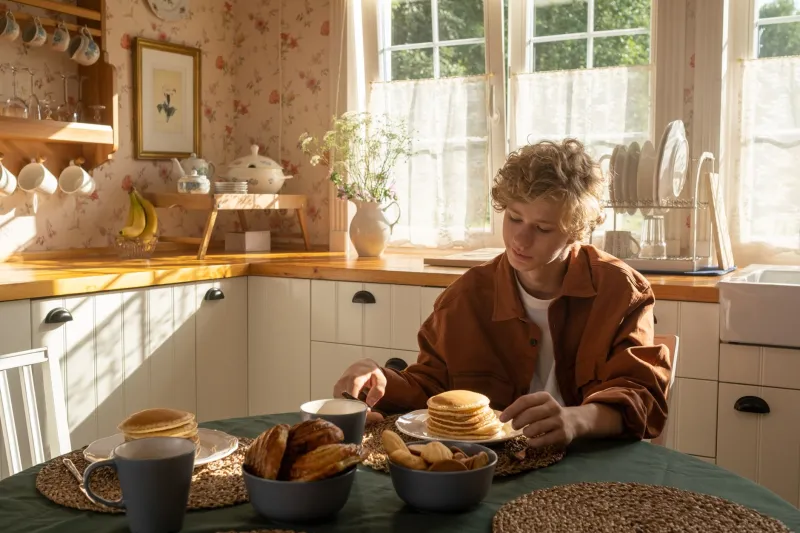
There's something almost radical about waking up on a Saturday with zero obligations and choosing to keep it that way. No agenda, no itinerary, no loose ends to tie up. Just a day that belongs entirely to wherever your attention drifts.
Americans are notoriously bad at this — the U.S. consistently ranks among the worst developed nations for work-life balance and vacation usage. We leave paid time off on the table. We check email on Sunday nights. We treat rest like a reward you have to earn rather than a baseline requirement.
The boredom comeback isn't just a personal wellness trend. It's a small, quiet act of resistance against a culture that measures human value in output. When you let a weekend stay empty, you're making a statement — to yourself, mostly — that your time has worth beyond what it produces.
And honestly? There's something kind of beautiful about that.
So if your plans this weekend fell through, or you're staring at a blank calendar and feeling that familiar flicker of guilt — maybe sit with it for a second. Let the hours stay open. See where your mind goes when nobody's asking anything of it.
Turns out, nothing might be exactly what you needed.