Roll the Dice, Look Up: Inside America's Tabletop Takeover
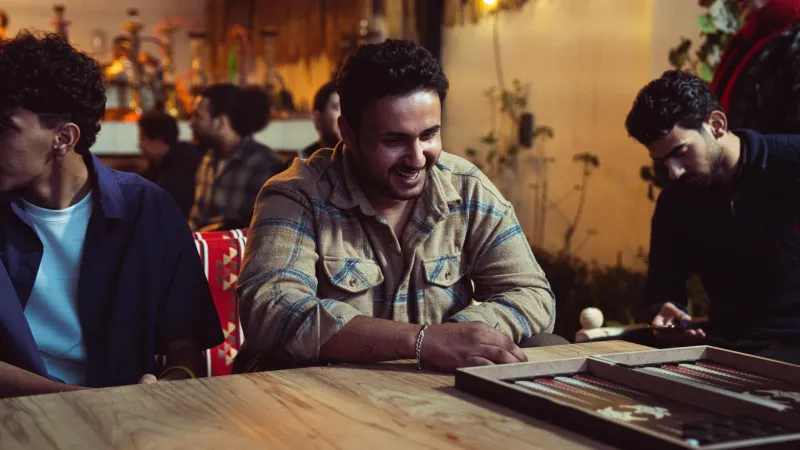
There's a sound disappearing from American living rooms, and it isn't music or laughter exactly — it's the low hum of six people staring at six separate screens. In its place, something older and stranger is creeping back: the shuffle of cards, the clatter of dice, the groan when someone flips over a tile that ruins everybody's plan.
Board games aren't just surviving in the digital age. They're thriving in it. And the reasons why say a lot about what we're hungry for right now.
The Shop on the Corner Is Doing Just Fine
Walk into almost any mid-sized American city and you'll find it: a hobby game shop with mismatched chairs, a wall of brightly illustrated boxes, and a calendar taped to the register full of scheduled game nights. Cafés where you can reserve a table and borrow from a library of hundreds of titles have popped up everywhere from Portland to Pittsburgh to Austin.
These aren't dusty relics of a hobby that peaked in the seventies. Modern board game cafés are social infrastructure — part coffeehouse, part community center, part excuse to leave the house. Owners will tell you the same thing: nobody comes in for the games alone. They come because it's a place where a stranger can ask, "Hey, want to join?" and it's completely normal.
Why Now?
The easy answer is pandemic whiplash. After two years of Zoom everything, a lot of Americans developed a low-grade allergy to yet another screen-based interaction. Board games are the opposite of that — bounded, physical, and fully present.
But the roots go deeper. The tabletop boom started well before 2020, powered by a wave of designers who treated game-making like an art form. The old standbys still sell — Monopoly, Scrabble, the ones hiding in your grandparents' closet — but the modern catalog is a different universe. Cooperative games where everyone wins or loses together. Gorgeous, sprawling strategy epics that take an entire evening. Quick party games that teach in five minutes and dissolve a roomful of coworkers into chaos.
The variety is the point. There's a game for every temperament, from the quiet optimizer to the loud storyteller to the friend who just wants to build something with little wooden pieces.
The People Making It Happen
Spend any time around the hobby and you meet the same archetypes. There's the shop owner who opened a store on a gamble and now hosts three packed nights a week. There's the independent designer — often working out of a spare room — who spent four years refining a single box and crowdfunds it to a six-figure backing total. And there are the everyday players, the ones who show up on a Tuesday with snacks and opinions.
What unites them is a shared belief that sitting around a table is its own reward. In a culture that increasingly treats hanging out as something that needs to be productive or documented, a four-hour game of trading wooden resources with your friends is almost radical. Nobody's filming it. Nobody's optimizing it. You're just there.
The Rules of the New Game Night
If you're tempted to join in, the barrier to entry is lower than it looks. A few things regulars tend to agree on:
- Start small. A 20-minute party game beats a three-hour epic when everyone's new. Nobody's first game should be a campaign.
- Pick a home base. A local shop or café with open game nights is the fastest way to learn — staff usually love teaching.
- Let one person read the rules. Every group has a rules reader. It's a noble role. Honor it.
- Losing is the fun part. Seriously. The games people remember are the ones with a legendary comeback or a spectacular collapse.
More Than a Trend
It's tempting to file the tabletop revival under "screen fatigue," and that's part of it. But there's something else going on. Board games are one of the few remaining activities where attention is the entry fee — you can't half-play, you can't scroll through it, and you can't do it alone.
In a culture that's been quietly reclaiming dinner tables, handwritten notes, and phone-free evenings, the game box fits right in. It's not about rejecting technology. It's about choosing, a few hours a week, to be unreachable and fully present — dice in hand, snacks within reach, and everyone around the table actually looking at each other.
The screens will be there when you get back. The dice, it turns out, are better company anyway.