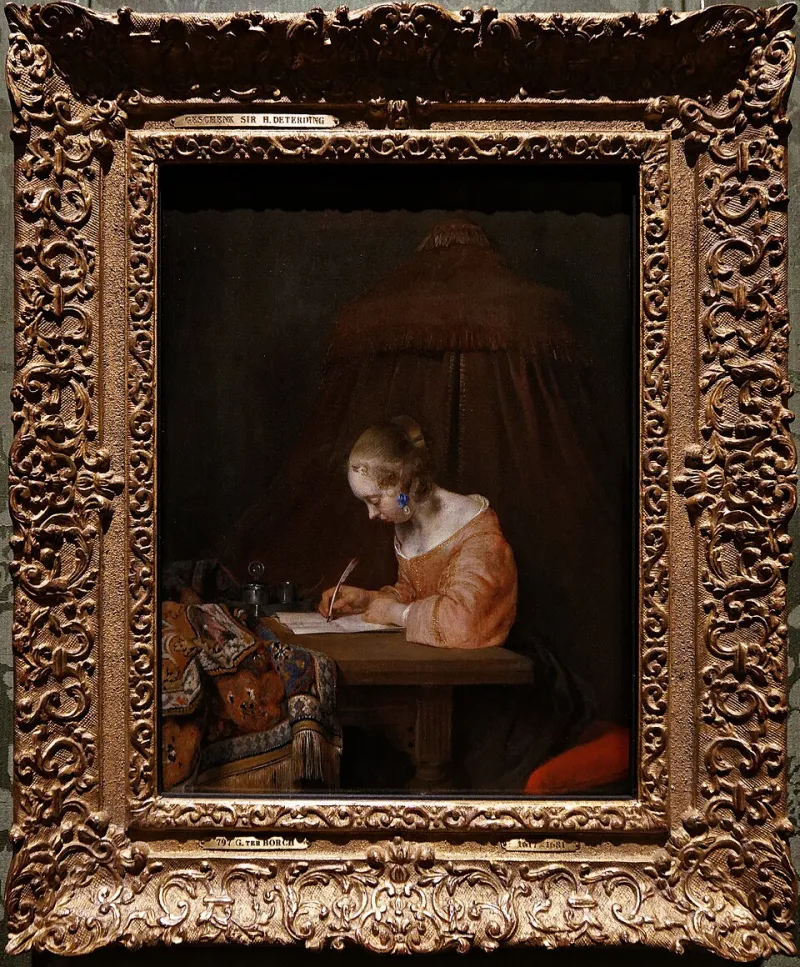
Going Deep: Why Americans Are Ditching the Scroll and Embracing the Slow Burn

Photo: Oludegun, CC BY-SA 4.0, via Wikimedia Commons
Somewhere between your fourteenth TikTok and your second half-watched YouTube video, something snapped. Not for everyone — but for a surprisingly large and growing slice of the American audience, the endless loop of quick hits stopped being satisfying and started feeling hollow. And they did something about it.
They went long.
Deep-dive podcasts running three hours. Docuseries with six dense, unrushed episodes. Longform essays that ask you to sit with an idea for twenty minutes rather than twenty seconds. These aren't niche products anymore — they're pulling serious numbers, and the people consuming them aren't doing it out of obligation. They're doing it because it feels good.
Welcome to what some media watchers are calling the Attention Span Renaissance.
The Brain Wants More Than a Hit
Here's the thing about dopamine: it's not the reward itself, it's the anticipation of reward. And short-form content has gotten so efficient at triggering that loop that it's essentially become empty calories for the brain. You get the hit, but there's no meal.
Long-form content works differently. It asks you to invest — and that investment builds something. Cognitive researchers have described this as narrative transportation, a state where sustained engagement with a story or idea produces a measurable sense of satisfaction that quick content simply can't replicate. You don't just consume it; you inhabit it.
That's part of why shows like Serial redefined podcast culture, why Making a Murderer had people canceling plans, and why newsletters like The Atlantic's longform features have maintained loyal readerships in an era when everyone said print-style writing was dead. The format isn't the problem. The shallowness is.
Podcasts Are the New Cathedrals
Let's talk about podcasts specifically, because the numbers here are genuinely striking. According to Edison Research, the average podcast listener in the U.S. consumes about eight episodes a week — and the most popular shows aren't the ten-minute news briefings. They're the sprawling conversations.
Joe Rogan's episodes routinely run two to three hours. Lex Fridman sits down with guests for four. Conan O'Brien's podcast, Conan O'Brien Needs a Friend, regularly clocks in past the ninety-minute mark. These aren't accidents of format — they're features. The length is the point.
Listeners describe the experience of a long podcast almost like companionship. You're not passively absorbing information; you're spending time with people. You follow the tangents. You hear someone change their mind mid-sentence. You get the texture of a real conversation rather than a polished soundbite. That texture is what people are craving.
Creators have noticed. Across Spotify, Apple Podcasts, and YouTube, long-form interview and documentary-style audio content has seen consistent growth, while flash-style news pods have plateaued. The audience is voting with their earbuds.
The Documentary Effect
Streaming platforms are paying close attention, too. Netflix, HBO Max, and Hulu have all expanded their documentary and docuseries slates in ways that would have seemed commercially risky five years ago. A six-part series about a single topic — a restaurant, a con artist, a cultural moment — now gets greenlit with confidence because the audience has proven it will show up.
What's interesting is how people watch these. Viewers report a distinct behavior shift: they don't multitask with longform documentaries the way they might with reality TV. They put the phone down. They sit with it. That intentional viewing has become, for many Americans, a form of self-care — not unlike how people talk about reading a physical book as a deliberate act of slowing down.
There's even a social component. Longform content creates shared vocabulary in a way that a thirty-second clip simply doesn't. When everyone in your friend group has watched the same four-hour documentary, you have things to talk about. Context. Nuance. Opinions that require more than a reaction emoji.
Brands and Creators Are Following the Hunger
The commercial world has picked up on this shift, even if it's moving a little awkwardly. Brands that built their entire identity around short, punchy content are quietly experimenting with longer formats — extended YouTube videos, serialized audio content, in-depth editorial partnerships with newsletters and magazines.
Substack's rise is a perfect case study. Writers who were told that nobody reads anymore are building five- and six-figure subscriber bases by writing more, not less. The secret isn't a paywall trick or a viral hook — it's consistent, substantive writing that treats readers like adults who have the capacity to stay interested. Turns out, they do.
Creators on YouTube have also discovered that the algorithm, long associated with rewarding clickbait and quick engagement, has quietly shifted to favor watch time. A video that keeps someone engaged for forty-five minutes is more valuable to the platform than one that gets a thousand clicks and a two-minute average view. The incentives are finally catching up to the appetite.
Choosing to Pay Attention Is the New Rebellion
There's something almost countercultural about deliberately choosing depth in 2025. When every platform is designed to fragment your attention and pull you somewhere new every few seconds, the act of sitting down with something long and demanding feels almost radical.
And people are owning it. There's a quiet pride in saying you listened to a four-hour conversation about physics, or that you spent a Sunday afternoon reading a 10,000-word magazine piece. It's not performative in the same way as some wellness trends — it's more personal than that. It's about reclaiming your own mental real estate.
The scroll isn't going anywhere. Short-form content will keep doing what it does. But the Attention Span Renaissance is real, and it's being built by people who got tired of feeling like their brain was being rented out by the algorithm — and decided they wanted it back.